The debate over an artificial intelligence bubble is colliding with a more immediate reality: developers still cannot build data centers quickly enough to meet committed demand.
For builders, the present challenge is execution rather than market creation.
Clayco founder Bob Clark told Forbes that his construction group completed 16 data centers last year and now has another 77 underway across 13 states. Data center work is expected to generate 75 percent of Clayco’s nearly $12 billion in 2026 revenue, reflecting the scale of capital moving from digital ambition into physical infrastructure.
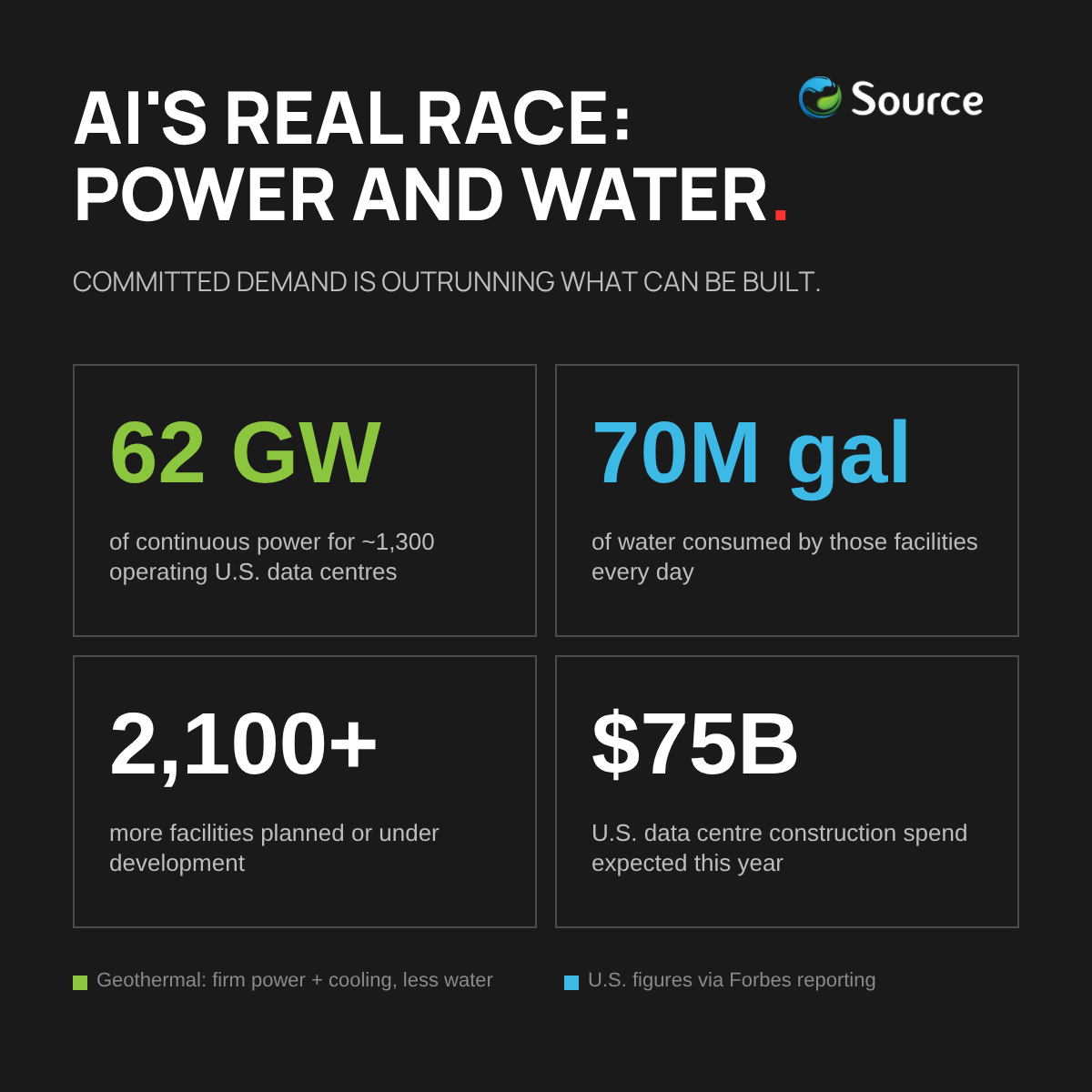
U.S. data center construction spending has more than tripled since 2023 and is expected to reach $75 billion this year, excluding computing equipment. Modern campuses are no longer simply large buildings filled with servers. They are integrated energy and industrial projects requiring generation, transmission, cooling, water systems, fibre, specialized construction and long-term community support.
That complexity is becoming the defining constraint. Approximately 1,300 operating U.S. data centers collectively require 62 gigawatts of continuous power and consume about 70 million gallons of water daily, according to figures cited by Forbes. More than 2,100 additional facilities are planned or under development, while billions of dollars in projects have already been delayed or blocked by local opposition and permitting challenges.
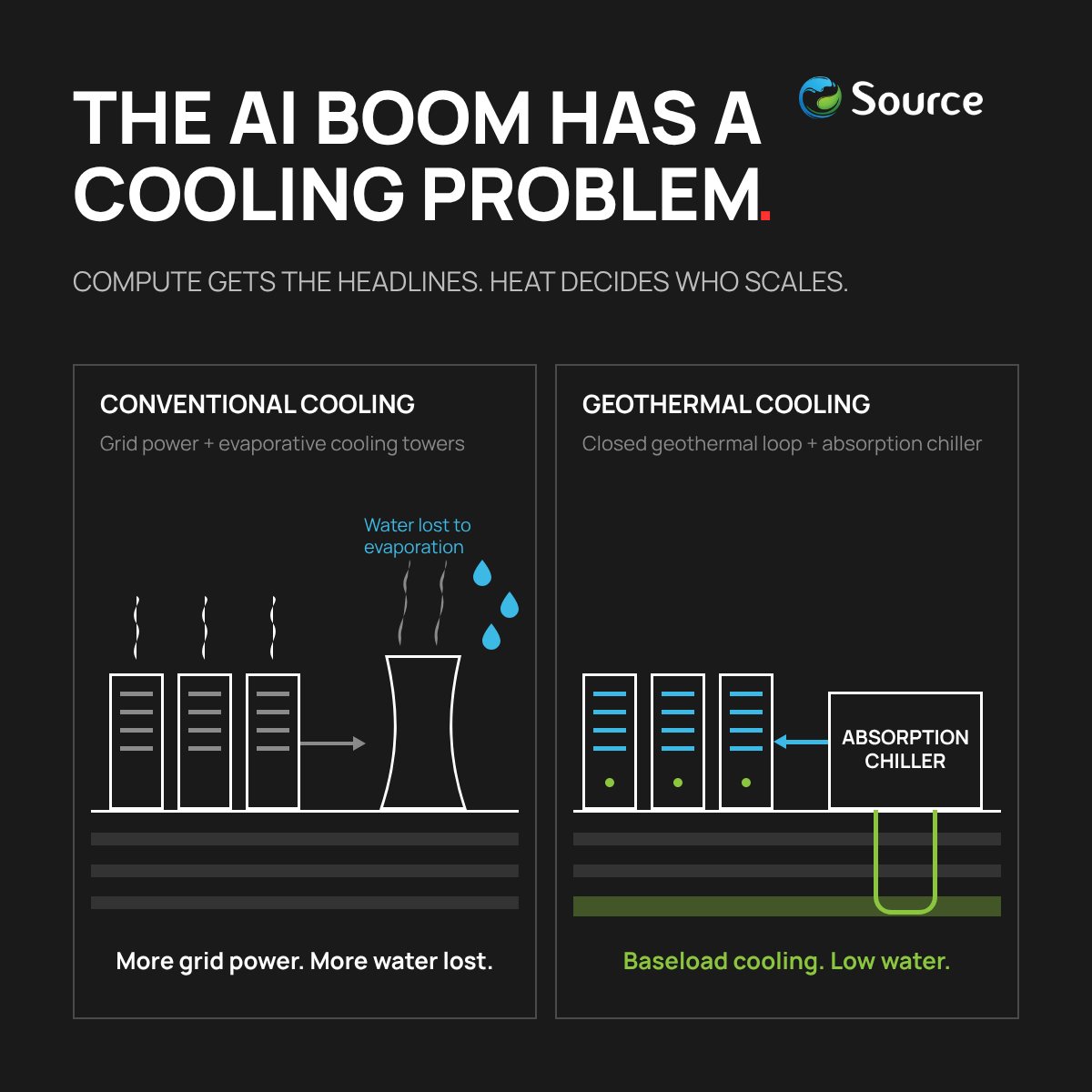
The lesson for the energy sector is clear. AI growth will depend not only on access to chips and capital, but on whether developers can secure dependable power and reject enormous quantities of heat without overwhelming grids, water supplies or neighbouring communities.
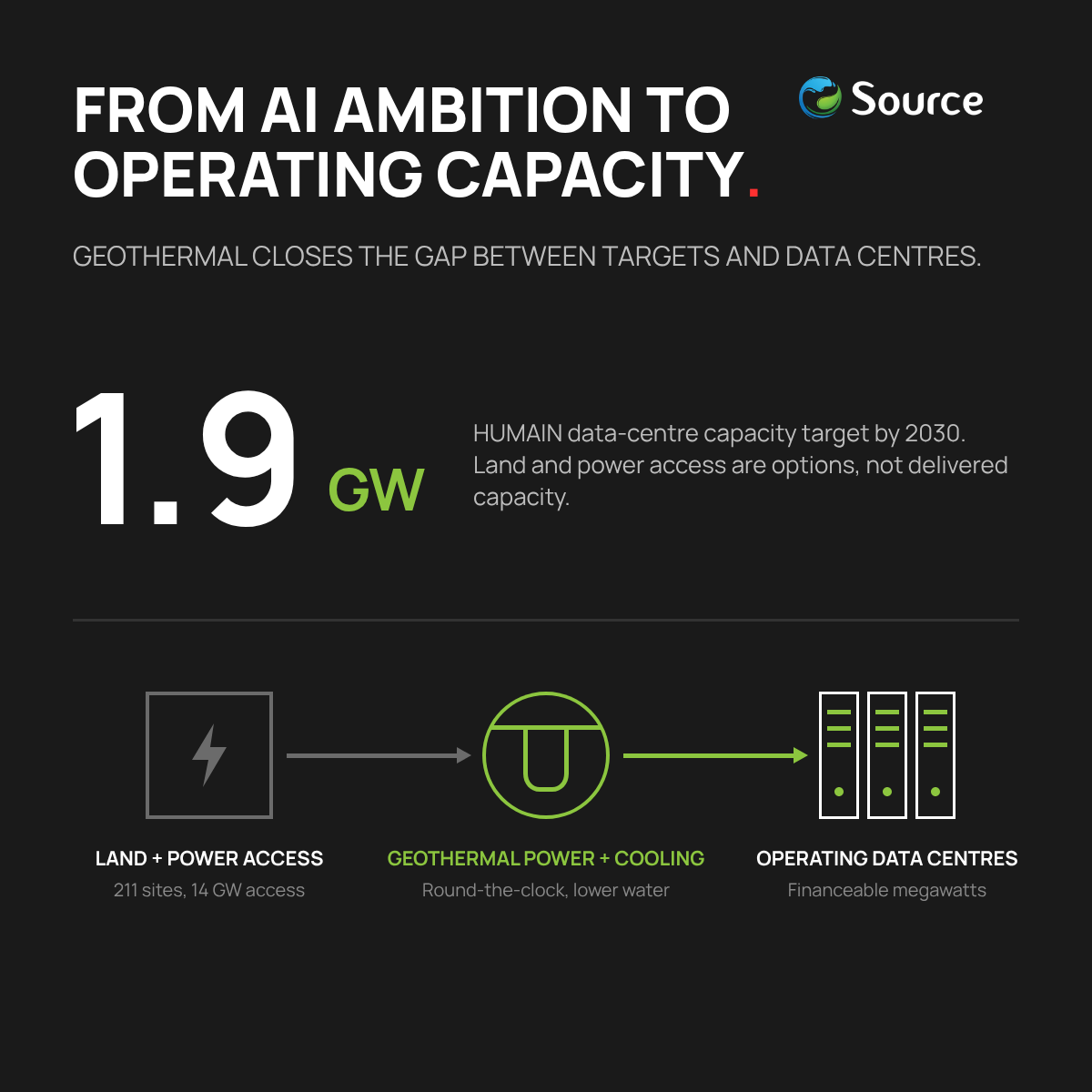
For Source Geothermal, this creates a compelling opening for infrastructure designed around place. Geothermal power and cooling can help developers evaluate local subsurface resources alongside computing demand, reduce dependence on constrained electrical systems and address water and emissions concerns earlier in project development.
The AI buildout may continue, but its winners will be determined at the infrastructure layer. Capital will increasingly favour projects that can demonstrate not only computing capacity, but a credible, resilient and publicly acceptable plan to power and cool it.
Source: Based on reporting by Christopher Helman in Forbes.