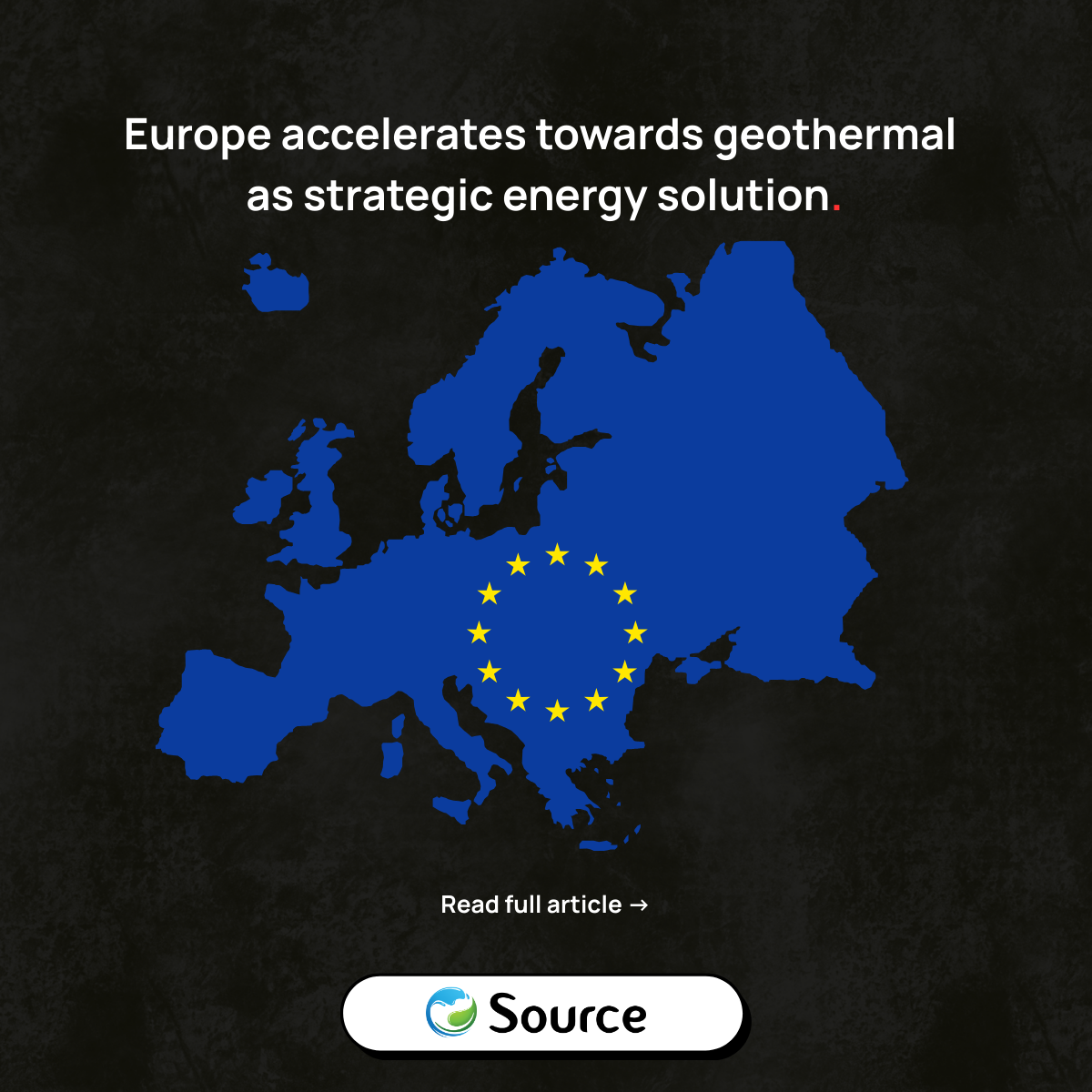
Momentum is building across Europe as geothermal energy moves from a niche renewable resource toward a central pillar of long-term energy security and industrial competitiveness.
New analysis highlighted this month suggests next-generation geothermal technologies could theoretically replace up to 42% of the European Union’s coal- and gas-fired electricity generation, marking one of the most significant opportunities yet identified for firm, low-carbon power across the region.
Unlike traditional geothermal systems limited to volcanic regions, enhanced geothermal technologies apply modern drilling and subsurface engineering techniques — many adapted from the oil and gas sector — allowing deployment across far broader geographies throughout Europe.
The timing aligns with major structural shifts in EU energy policy. Following recent energy security challenges and efforts to reduce reliance on imported fossil fuels, European policymakers are accelerating renewable deployment under broader initiatives such as REPowerEU and the European Green Deal. These frameworks prioritize resilient domestic energy sources capable of delivering stable, around-the-clock power — a role geothermal is uniquely positioned to fill.
Economic signals are strengthening alongside policy momentum. Studies indicate approximately 43 GW of enhanced geothermal capacity could already be developed at electricity costs comparable to coal and natural gas, highlighting geothermal’s growing competitiveness within Europe’s evolving energy mix.
Industry groups are now calling for a dedicated European geothermal strategy to accelerate permitting, mobilize investment, and scale deployment across member states. Proposed targets envision as much as 250 GW of geothermal capacity by 2040, underscoring the technology’s expanding role in Europe’s decarbonization pathway.
For developers, infrastructure partners, and subsurface engineering companies, Europe’s shift represents more than policy ambition — it signals the emergence of a large, coordinated market for clean, dispatchable energy.
As geothermal transitions from demonstration to deployment, the EU is positioning underground heat as a cornerstone of its future energy system, opening new opportunities for scalable geothermal solutions worldwide.