Geothermal energy is beginning to attract greater attention across the Gulf, where rising demand for electricity, cooling and water is creating opportunities for technologies that can operate around the clock.
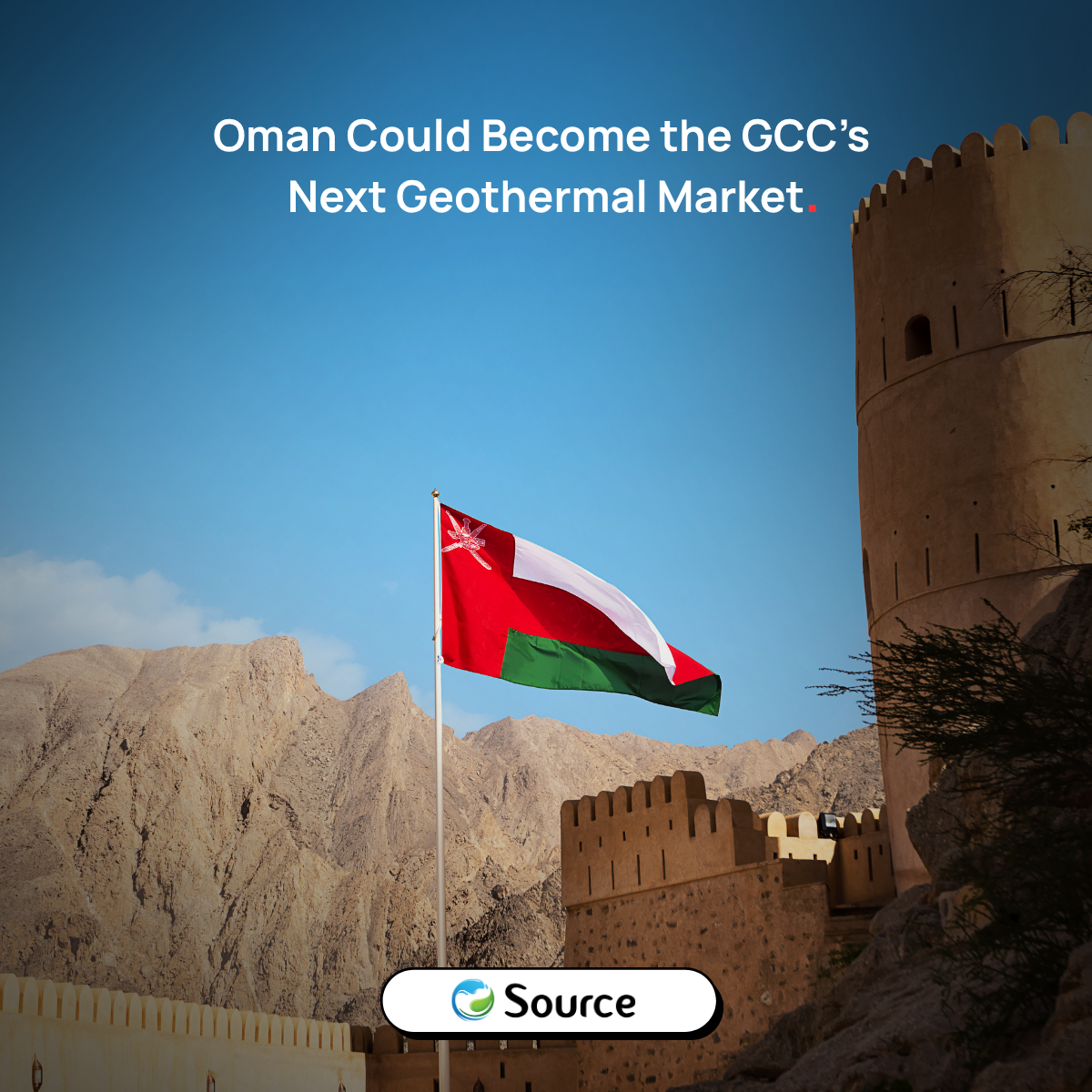
Source Geothermal is already advancing opportunities in Saudi Arabia and the United Arab Emirates, particularly around geothermal-enabled cooling and dependable energy infrastructure for data centres and other large industrial users. Oman could represent a natural next market as the Sultanate explores how underground heat might complement its established solar and wind resources.
A recent Oman Observer analysis highlighted thermal springs around the Al Hajar Mountains and research suggesting underground reservoir temperatures of approximately 66°C to 103°C beneath parts of the Batinah Plain. Estimated circulation depths ranged from roughly 400 metres to 1.9 kilometres.
Those temperatures may not support conventional high-temperature geothermal plants, but they could create opportunities for binary-cycle generation and direct-use applications. These include industrial heat, desalination and cooling—all areas closely connected to Oman’s economic development and climate conditions.
The potential cooling application is particularly significant. Electricity demand rises sharply during the Gulf’s intense summer months, while new data centres, tourism destinations and industrial facilities require increasingly large and reliable cooling systems. Geothermal heat could potentially support absorption chilling or other thermal cooling technologies, reducing pressure on electrical grids and water supplies.
Commercial development would still require detailed subsurface mapping, testing and drilling. Thermal springs alone do not prove that an economically recoverable resource exists. Oman also benefits from abundant and increasingly cost-competitive solar energy.
Geothermal’s advantage is its consistency. Unlike solar and wind, a properly developed geothermal resource can operate continuously and complement variable renewable generation.
As Source builds its presence in Saudi Arabia and the UAE, Oman’s geology and growing cooling requirements suggest it could become the next GCC market to examine what lies beneath the surface.
Source: Oman Observer