A new peer-reviewed study has identified multiple areas around Egypt’s Gulf of Suez as potentially suitable for geothermal electricity generation and direct thermal applications.
Published in Scientific Reports, the research combines Geographic Information Systems with multi-criteria decision analysis to evaluate possible geothermal plant locations. The authors used subsurface temperature information from 52 hydrocarbon wells and assessed nine thermal, geological, environmental and infrastructure factors, including heat flow, fault density, seismic activity, terrain, land use and proximity to roads and the electricity grid.
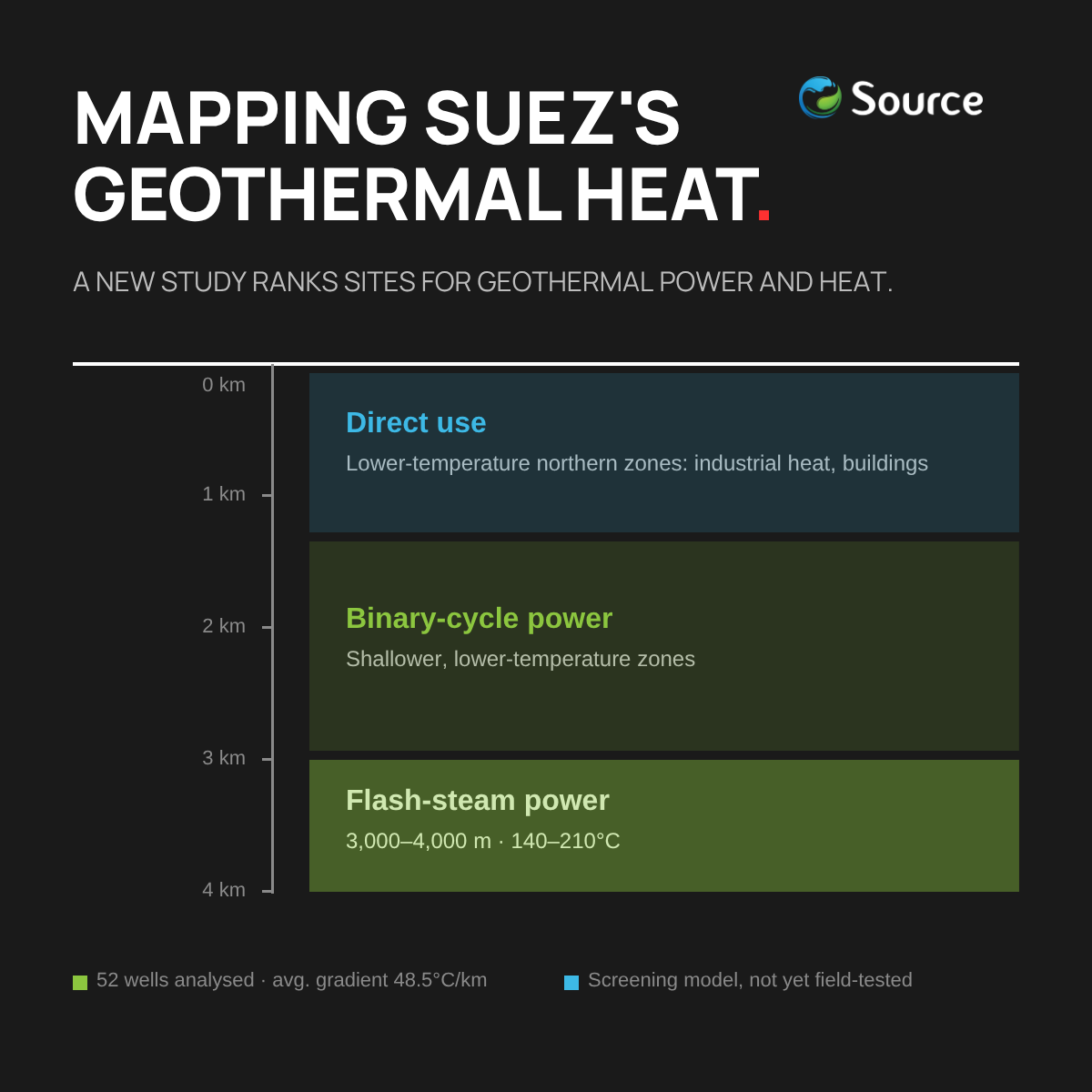
The analysis calculated an average geothermal gradient of 48.5°C per kilometre and found a strong relationship between temperature and depth. Researchers concluded that several coastal locations could support either flash-steam or binary-cycle generation, depending on reservoir temperature and drilling depth.
On the eastern side of the Gulf, Hammam Faraun, Ras Sudr and Abu Zenima were identified as candidates for flash-steam systems at depths between 3,000 and 4,000 metres, where estimated temperatures range from 140°C to 210°C. Binary-cycle potential was identified at shallower depths and lower temperatures.
The western coast also produced favourable results around Ras Gharib, Ras Shukeir, Jabal al-Zeit and Jabal Ataqa. Other areas, including Ayoun Moussa, Zaafarana and several wadis, were categorized primarily for binary-cycle development. Lower-temperature northern zones may be better suited to direct uses such as industrial heat, building services or thermal supply.
The findings do not replace field exploration, reservoir testing or commercial feasibility work. Instead, the model provides a disciplined way to prioritize locations before committing capital to detailed geophysical surveys and drilling.
For Source Geothermal, the study reinforces the value of combining existing oil and gas data with infrastructure and demand mapping. Egypt’s extensive well history may help reduce early uncertainty, while the Gulf’s proximity to industrial, tourism and urban growth creates potential demand for dependable power and thermal services.
The next step is translating regional promise into site-specific evidence. That requires confirming permeability, fluid chemistry, sustainable flow rates, drilling costs and the most valuable use for each temperature range for future project development decisions.
Source: Based on research published in Scientific Reports.