A new national initiative aims to transform how Canada identifies and develops its deep geothermal resources.
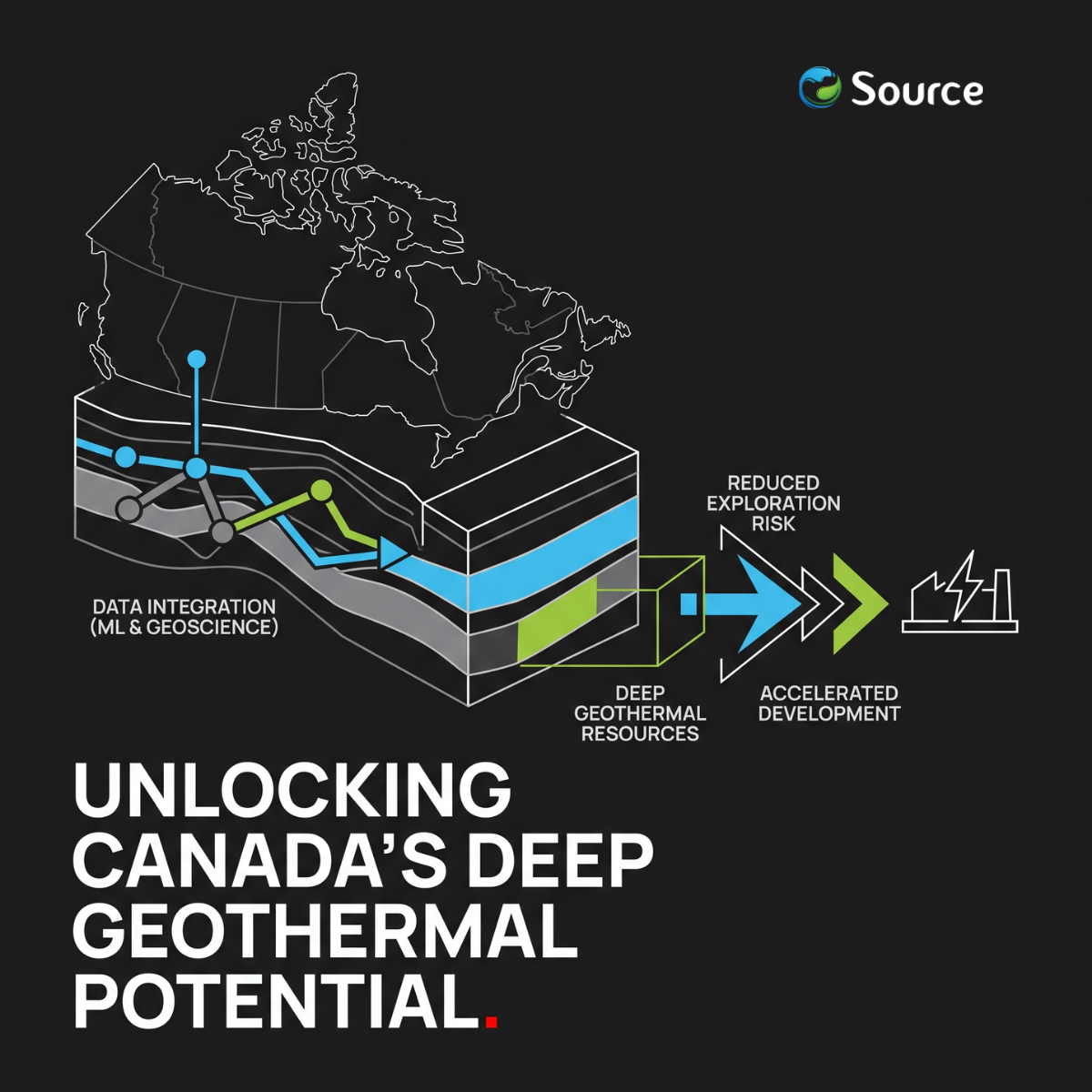
Seequent and the Cascade Institute have announced a collaboration to develop the Canadian Thermal Model, a project designed to create a comprehensive view of deep heat resources across the country. The initiative will integrate more than 20 layers of geological and geophysical data using advanced machine learning methods.
One of the greatest challenges facing geothermal development is uncertainty about conditions deep below the Earth’s surface. Limited subsurface data can increase exploration risk, development timelines and project costs.
The Canadian Thermal Model aims to address this challenge by improving understanding of where geothermal resources are located and providing better information for investors, policymakers and project developers.
The project will combine Canadian geoscience expertise with Seequent’s advanced geophysics software and machine learning technology. The Cascade Institute will lead the initiative through its Deep Geothermal program alongside research partners including Simon Fraser University, 400C Energy and the Geological Survey of Canada Pacific Division.
For Source Geothermal, the initiative reflects a broader shift toward data-driven geothermal exploration and development.
As global electricity demand increases from artificial intelligence, data centres and other energy-intensive industries, reliable baseload energy and advanced thermal technologies are becoming increasingly important.
Better subsurface data can help reduce exploration risk, improve investment decisions and accelerate the development of geothermal projects.
Canada has significant geothermal potential. Creating a clearer national picture of the country’s deep heat resources could be an important step toward transforming that potential into scalable energy infrastructure.