The scale of next-generation AI infrastructure is beginning to resemble something closer to industrial civilization planning than traditional data centre development.
Across the world, new AI campuses are being proposed at unprecedented scale — not measured in megawatts alone, but in integrated ecosystems of power generation, cooling, compute density, and long-duration infrastructure resilience.
Some emerging concepts now envision:
- Multi-gigawatt AI campuses
- Millions of square feet of compute infrastructure
- Thousands of ultra-dense AI clusters
- Trillions of AI-generated tokens processed every second
- Integrated energy + compute architectures designed as unified systems
The reason is simple: artificial intelligence is becoming one of the most energy-intensive industries humanity has ever created.
Training frontier AI models now requires enormous concentrations of electricity, cooling, networking, and infrastructure redundancy. As inference demand explodes globally, the challenge is no longer merely building better models — it is securing enough reliable power to sustain them.
That is why energy is quickly becoming the defining bottleneck of the AI era.
Future AI infrastructure may require:
- Dedicated power generation assets
- Advanced cooling systems
- Long-duration thermal storage
- Hardened grid infrastructure
- Autonomous industrial operations
- Off-grid or hybrid energy ecosystems
And eventually, these same requirements may extend beyond Earth itself.
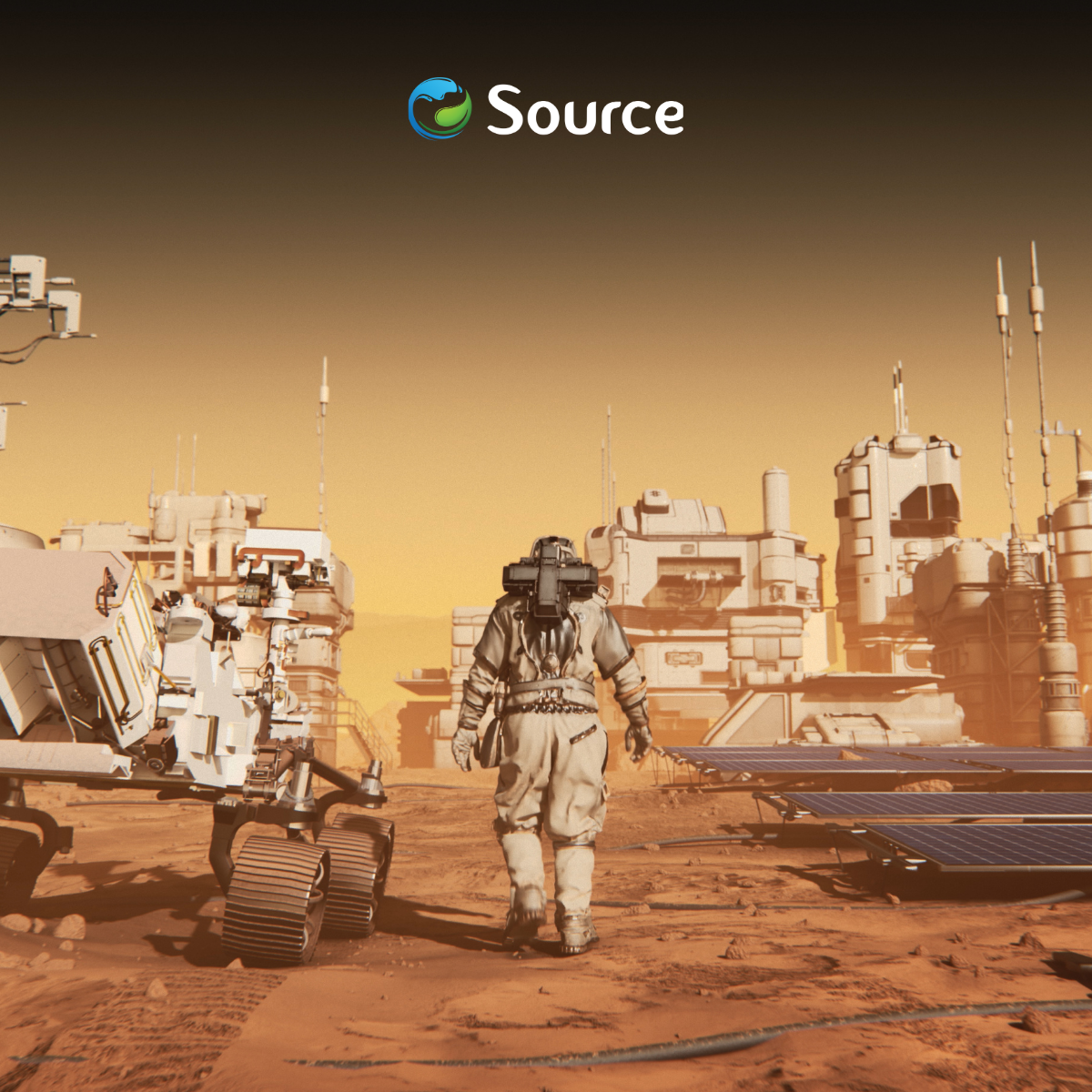
As long-term discussions around lunar industry and Mars habitation evolve from science fiction toward engineering reality, compute infrastructure will become essential to autonomous operations, robotics, communications, manufacturing, and survival systems. Any permanent extraterrestrial settlement would require stable baseload energy capable of operating continuously in extreme environments.
This creates an intriguing possibility for geothermal and subsurface energy technologies.
On Mars, where dust storms can disrupt solar generation for extended periods and temperatures fluctuate dramatically, underground thermal systems could eventually play a role in localized power generation, thermal regulation, or industrial heat management beneath the planet’s surface.
While these concepts remain speculative today, the trajectory is becoming increasingly clear.
The future AI race is not simply about software.
It is about civilization-scale infrastructure — power, cooling, compute, and resilience — whether on Earth, in remote deserts, or someday, perhaps, on another planet entirely.