Alberta’s pipeline opportunity may involve moving data expertise rather than hydrocarbons.
In a column published by the Calgary Herald and CORE Strategic Management, Shawn Howard argues that data centres are entering the same political environment that shaped Canada’s pipeline debates. Projects face questions about electricity, water, emissions, land use and community impacts. If proponents wait until opposition is organized, technical merit may no longer be enough to secure public acceptance.
Source Geothermal agrees—but the opportunity extends beyond building data centres in Alberta.
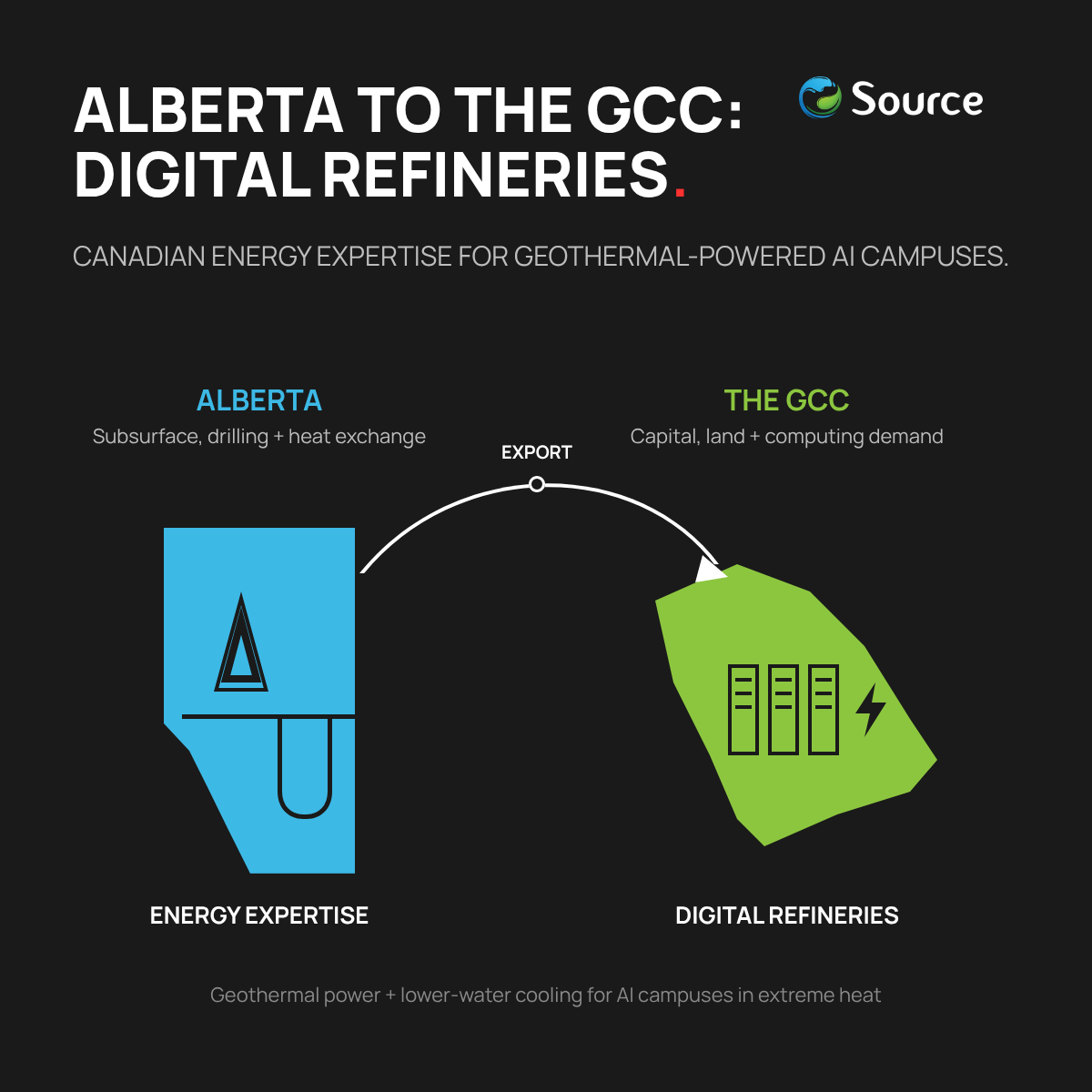
The Gulf Cooperation Council is investing in sovereign AI, cloud computing and hyperscale infrastructure. These facilities can be understood as “digital refineries”: industrial campuses that consume electricity, process raw data into valuable digital products and require cooling to operate.
Alberta has developed the capabilities needed to deliver energy infrastructure. Its companies understand subsurface geology, drilling, reservoir engineering, pipelines, heat exchange, modular construction, project finance and operations in environments.
That expertise can be exported to Saudi Arabia, the United Arab Emirates and GCC markets through geothermal infrastructure.
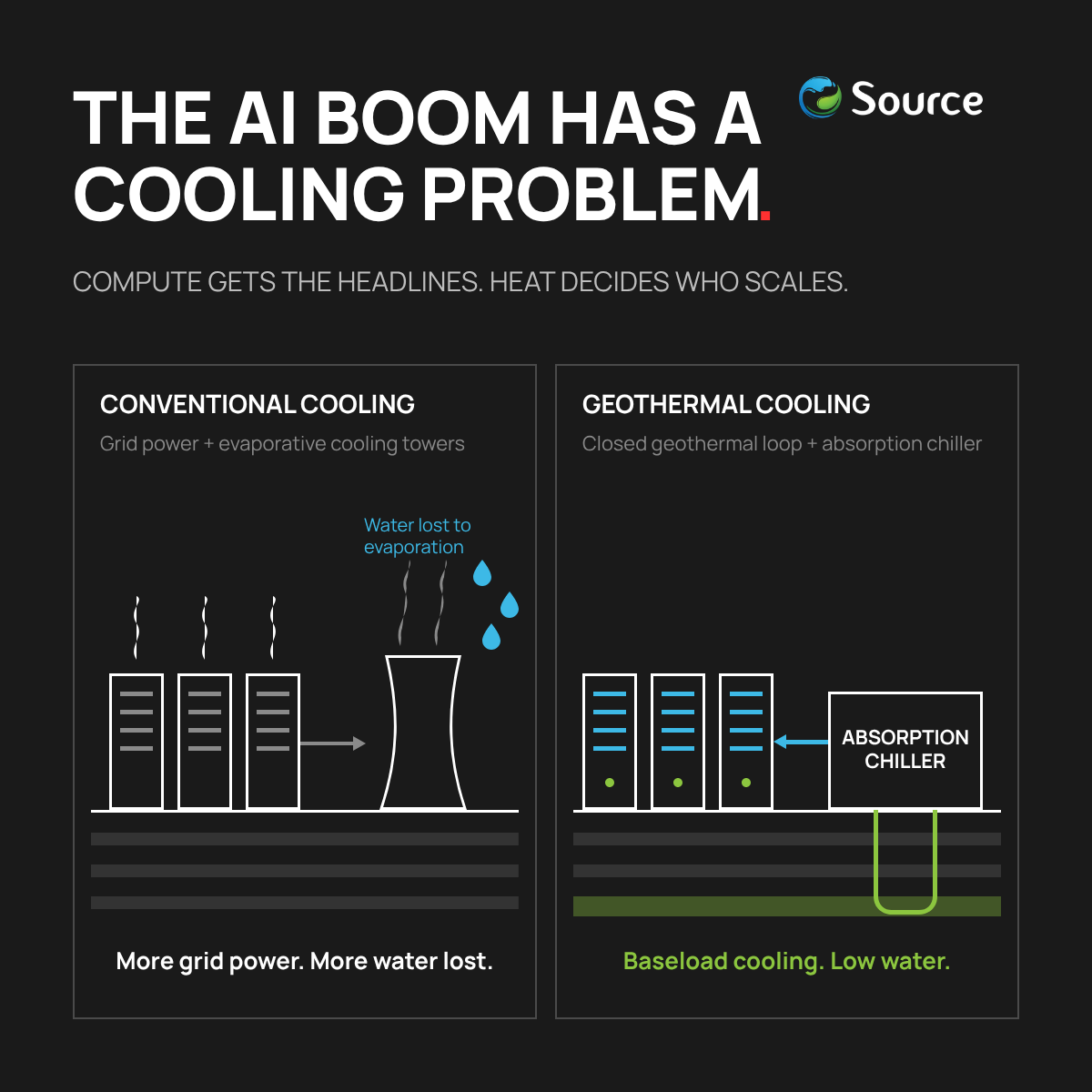
Geothermal systems can provide power, subsurface temperatures and lower-water cooling solutions for AI campuses operating in extreme heat. This creates an opportunity to combine Canadian energy knowledge with Gulf capital, land and computing demand.
The lesson from Alberta’s pipeline experience is not to avoid infrastructure. It is to design projects transparently, engage communities early and demonstrate value.
Canada helped build the energy systems that powered the industrial economy. Alberta can help the GCC build digital refineries powered and cooled by geothermal infrastructure.
Sources: Calgary Herald, “Data Is the New Pipeline Battle,” September 1, 2026; CORE Strategic Management, “Data Is the New Pipeline Battle,” September 2, 2026.