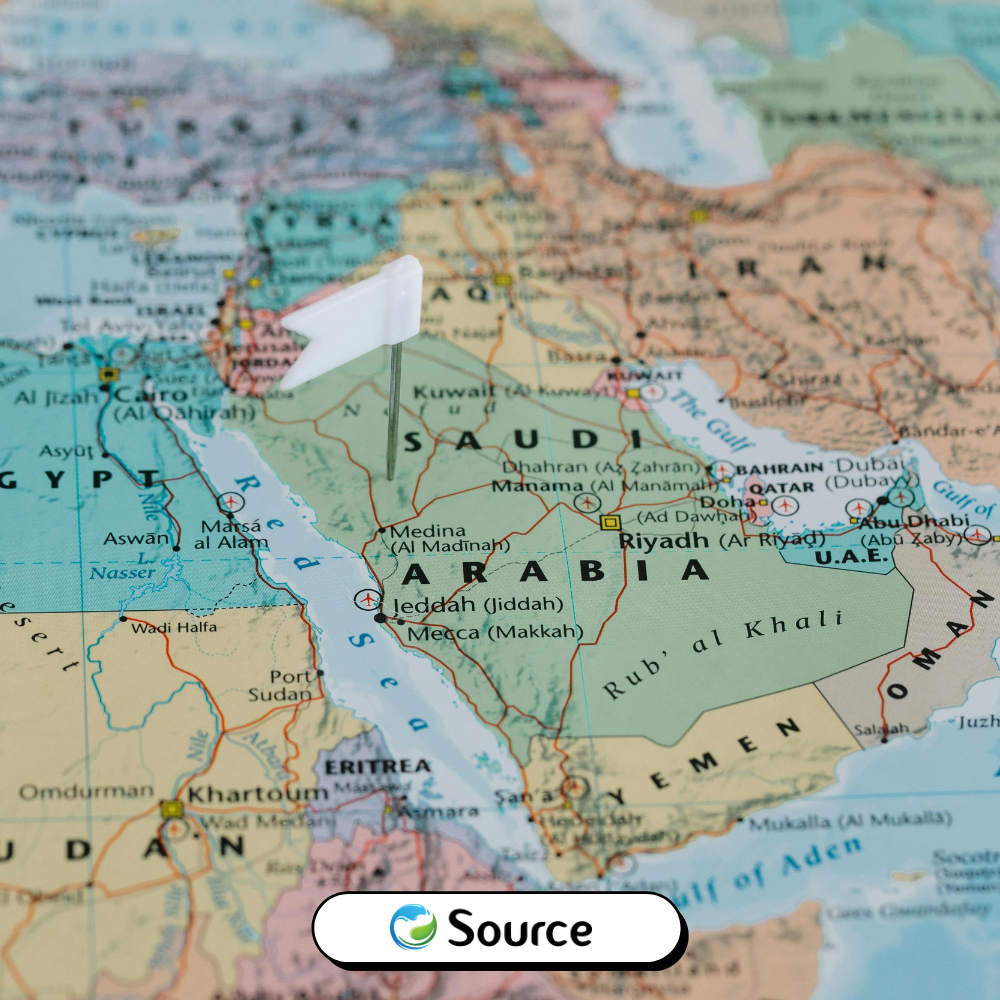
A newly launched exploration tool, GeoMap™ Middle East—developed by Project InnerSpace—shines a spotlight on a vast and largely overlooked clean-energy opportunity in the Gulf: geothermal. According to the report, the region can harness geothermal resources for district-cooling, energy storage, and power generation at scales previously unimagined.
Cooling the booming cities of the Gulf consumes up to 70 % of peak electricity demand. GeoMap estimates a potential of around 14,000 GW of geothermal cooling capacity across the region—including Iran, Egypt, Iraq, Turkey, Saudi Arabia, the UAE and Qatar. For ultrahot urban environments like Riyadh, Doha and Dubai, geothermal district-cooling offers a game-changer: reducing grid strain, slashing emissions and repurposing fossil-era infrastructure.
Beyond cooling, the initiative points to geological formations across northern Saudi Arabia, the Gulf states, Yemen, Syria and Iraq as prime subsurface storage zones. These “earth batteries” could store surplus solar or wind energy underground as heat and release it when needed, thereby tackling the holy grail of renewable intermittency. And for power generation: zones such as the Red Sea Rift (west-Saudi / northern Yemen) are flagged for potential gigawatt-scale geothermal-powered plants and desalination projects—a notable step beyond heating and cooling alone.
What accelerates this agenda is the region’s deep legacy of oil & gas: decades of drilling expertise, established service sectors, and relevant infrastructure reduce cost and risk. “The resource sits below some of the world’s most capable and resourced oil and gas companies,” says Project InnerSpace’s Executive Director.
For the geothermal sector this is a golden moment: the Gulf is wired for scale, fierce demand is already baked in, and the climate imperative is crystal clear. If geothermal can move from map to ground, the region could redefine the playbook for clean baseload, cooling and storage.
Link to article: ThinkGeoEnergy