When people discuss the future of artificial intelligence and data centres, the conversation almost always begins with power.
How much electricity will AI consume?
Where will that power come from?
Can grids keep up with demand?
These are important questions, but another critical resource is receiving far less attention: water.
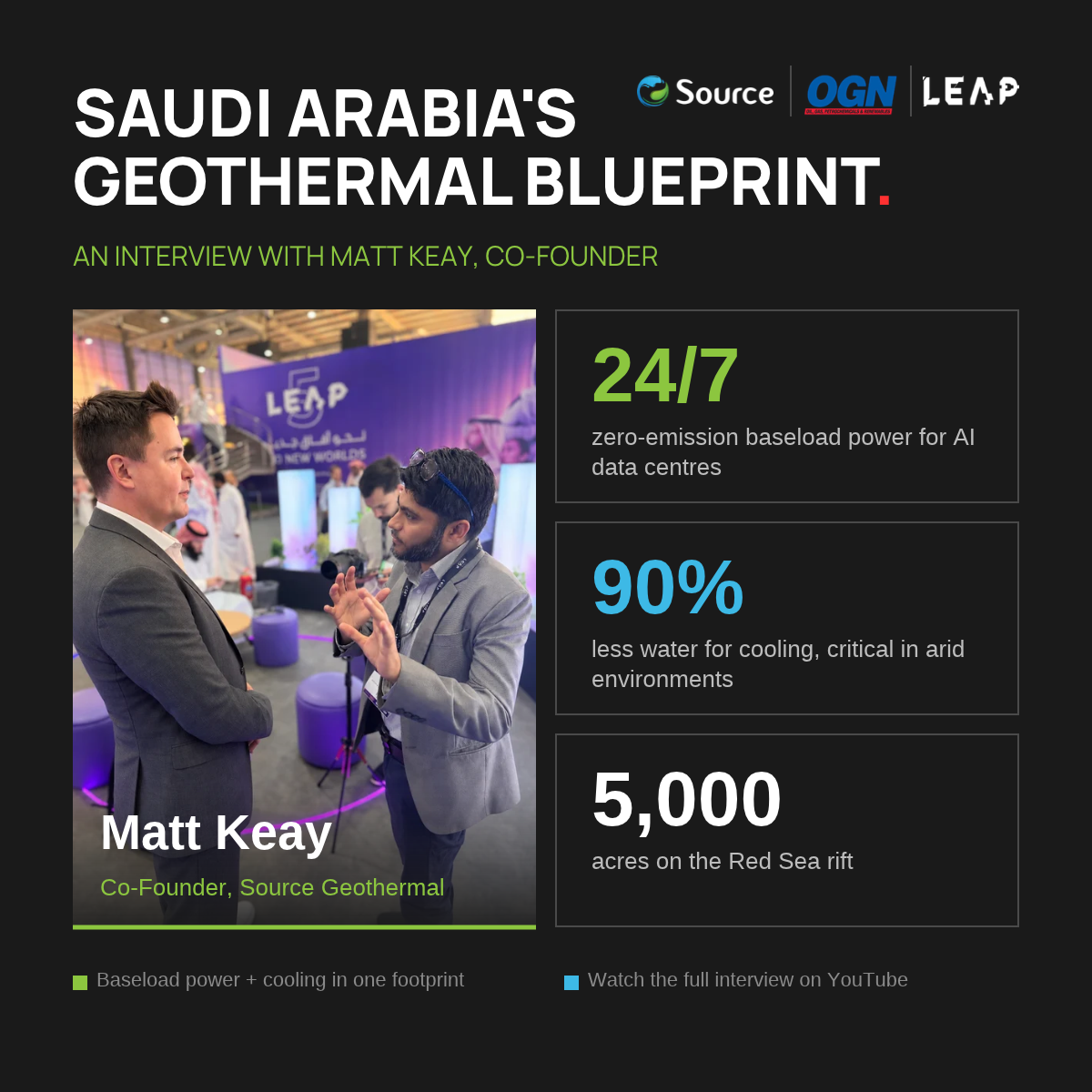
Many of today’s data centres rely heavily on water-intensive cooling systems to maintain operating temperatures. As computing power increases and AI workloads become more demanding, cooling requirements rise alongside them. In many parts of the world, particularly in hot and arid regions, this creates a growing challenge.
The same regions attracting major investments in AI, cloud infrastructure, and digital transformation are often facing increasing pressure on water resources.
Countries across the Gulf Cooperation Council, including Saudi Arabia and the UAE, are investing billions into becoming global technology hubs. At the same time, water scarcity remains a strategic consideration for long-term infrastructure planning.
This creates a new reality for developers, investors, and policymakers.
The question is no longer simply whether enough power is available.
The question is whether sufficient cooling can be delivered without placing additional strain on already limited water resources.
This is where geothermal-enabled cooling solutions become increasingly attractive.
By leveraging subsurface thermal resources and closed-loop cooling systems, geothermal technologies can reduce dependence on conventional cooling approaches while improving energy efficiency and lowering water consumption. For large-scale data centre campuses, the benefits extend beyond sustainability. They directly support operational resilience, energy security, and long-term infrastructure planning.
As artificial intelligence continues to reshape economies, the infrastructure supporting AI must evolve as well.
Power will remain essential.
But in many regions, the ability to cool infrastructure efficiently and responsibly may become the defining constraint on future growth.
The next generation of digital infrastructure will not be measured solely by megawatts.
It may also be measured by how effectively it manages every drop of water.