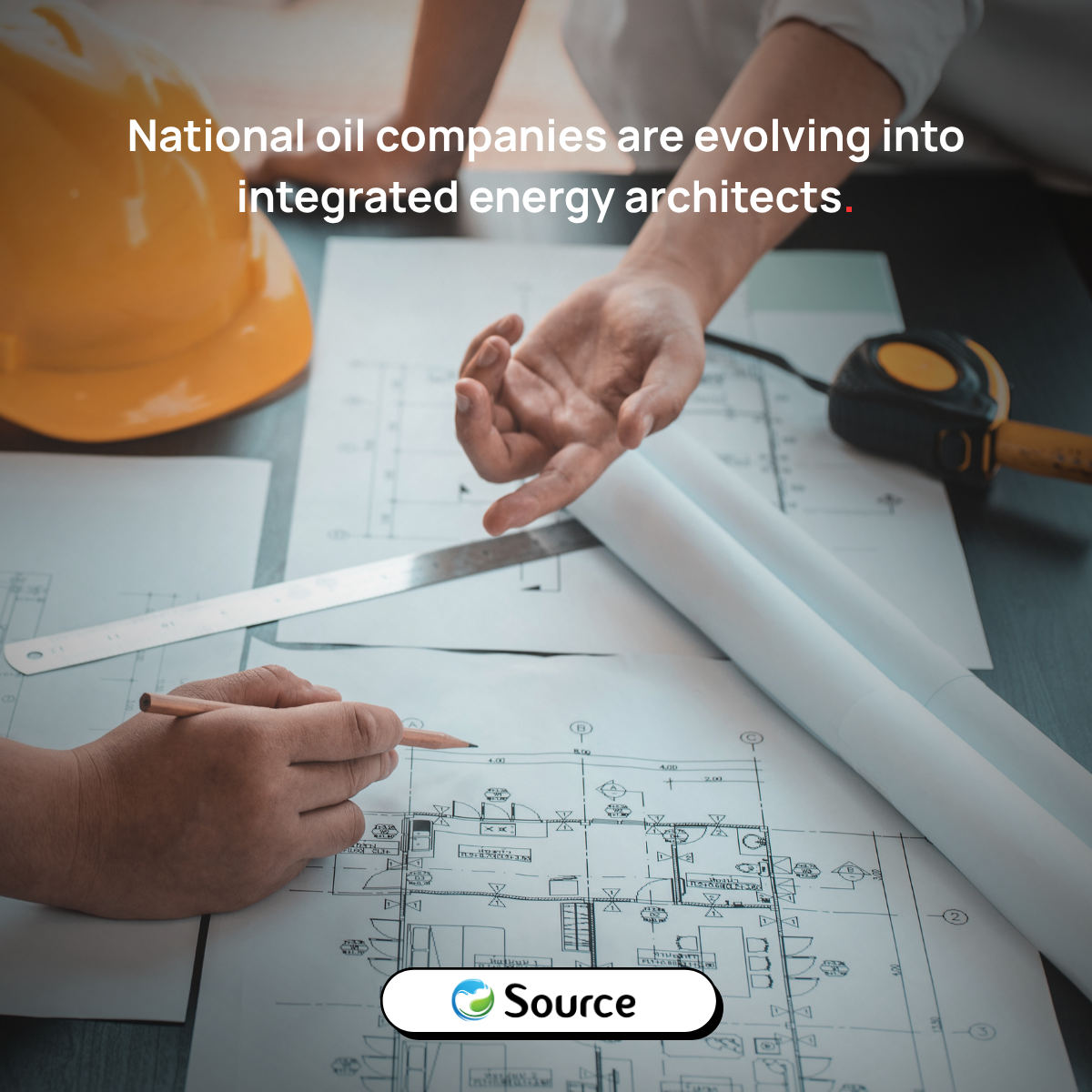
For decades, national oil companies (NOCs) were primarily measured by their ability to find, produce, and export hydrocarbons. Today, that definition is changing.
As global energy systems become more complex, many of the world’s largest energy companies are evolving from resource custodians into architects of integrated energy ecosystems. Their mandate now extends beyond oil and gas production to include energy security, industrial competitiveness, emissions reduction, digital infrastructure, and long-term economic resilience.
This shift is particularly visible across the Gulf region.
Companies such as ADNOC are investing not only in conventional energy production, but also in LNG, hydrogen, carbon management, renewable energy, and emerging technologies. The objective is not to replace hydrocarbons overnight. Rather, it is to build energy systems capable of meeting today’s demand while preparing for tomorrow’s opportunities.
The challenge facing these organizations is significant. Global electricity demand is expected to rise substantially over the coming decades, driven by industrial growth, electrification, and the rapid expansion of artificial intelligence and data centres. Governments are simultaneously seeking affordable energy, lower emissions, and greater energy independence.
Meeting all three objectives requires a broader approach than simply producing more energy.
It requires integrating molecules, electrons, infrastructure, technology, and capital into a coordinated platform capable of supporting economic growth.
This is where geothermal energy can play an increasingly important role.
Deep geothermal resources have the potential to provide reliable baseload energy, industrial heat, and highly efficient cooling for energy-intensive facilities such as data centres. Unlike many energy technologies, geothermal can contribute to energy security, emissions reduction, and infrastructure resilience simultaneously.
The future winners in global energy may not be those with the largest reserves. They may be those most capable of integrating multiple energy solutions into a cohesive system.
The role of the national energy company is evolving.
The next generation of energy leaders will not simply produce energy. They will design the platforms that power entire economies.