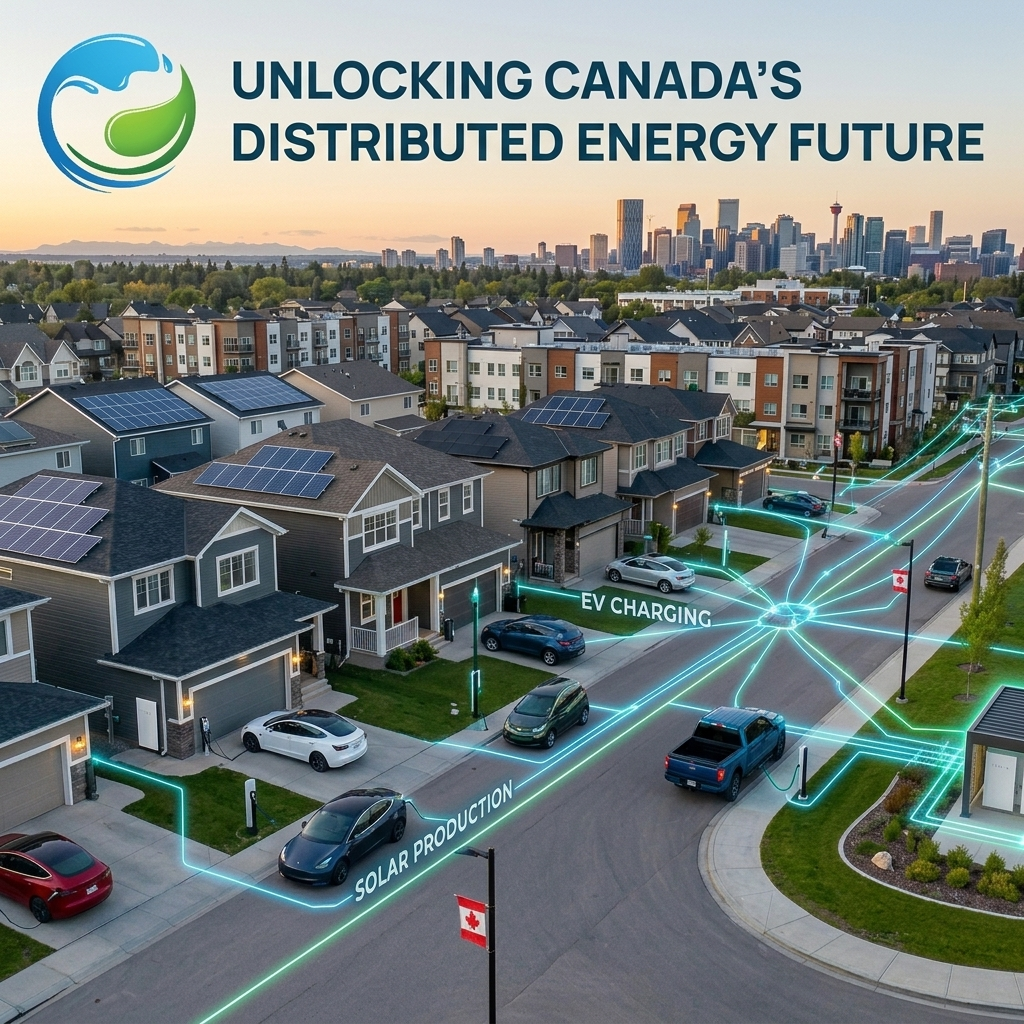
Canada’s electricity system is entering a major transition. What was once a centralized grid dominated by large generation facilities is evolving into a more flexible network of distributed energy technologies located closer to where energy is consumed.
This shift was the focus of the Clean Energy Canada webinar “Unlocking DER Potential in Canada,” which brought together experts from The Brattle Group, Dunsky Energy + Climate Advisors, and Blunomy to explore how distributed energy resources (DERs) are reshaping power systems across North America.
For utilities, developers, and infrastructure investors, the message was clear: DERs are moving from the margins of the grid to the center of energy planning.
What Are Distributed Energy Resources?
Distributed energy resources are small-scale technologies located close to where electricity or thermal energy is used rather than produced at large centralized power plants.
Examples include:
- Smart thermostats
- Electric vehicle chargers
- Heat pumps
- Water heaters
- Battery storage
- Rooftop solar
- Geothermal heating and cooling systems
Individually these technologies are small, but when coordinated they can function collectively as flexible grid resources.
Historically, energy consumers played a passive role in electricity systems. Today, electrified technologies in homes and businesses can shift or reduce demand, helping utilities manage peak loads and avoid costly infrastructure upgrades.
Increasingly, these devices are coordinated through Virtual Power Plants (VPPs)—software platforms that aggregate thousands of distributed assets into a dispatchable energy resource.
Canada’s DER Adoption Is Accelerating
Canada is still earlier in the DER adoption curve compared to some U.S. markets, but adoption is growing rapidly.
Examples highlighted during the webinar include:
- Hydro-Québec: DER contributions approaching roughly 5.5% of peak demand
- Ontario: expanding participation pathways through the IESO
- British Columbia: demand response programs projected to deliver ~270 MW of peak capacity by 2030
Utilities across the country are also developing DER roadmaps and updating regulatory frameworks to integrate distributed technologies into grid planning.
Managing the Grid Through Flexibility
Beyond reducing peak demand, DERs can also help address local grid constraints.
Traditionally, when distribution infrastructure approaches its limits, utilities invest in upgrades such as new transformers or expanded power lines.
Distributed technologies create an alternative known as Non-Wires Alternatives (NWAs).
Instead of expanding physical infrastructure, utilities can deploy:
- demand response
- distributed batteries
- smart EV charging
- flexible building loads
- district geothermal heating and cooling systems
Because geothermal systems dramatically reduce electricity demand for heating and cooling—often the largest energy loads in buildings—they can play a meaningful role in reducing both peak demand and long-term infrastructure requirements.
The Future Grid Will Be Distributed
As Canada electrifies transportation, buildings, and industry, electricity demand will continue to grow.
Meeting that demand entirely through traditional generation and transmission infrastructure would require massive investment.
Distributed energy resources offer a complementary strategy. By coordinating millions of flexible devices—from EV chargers to geothermal systems—utilities can manage demand more efficiently while maintaining reliability.
The energy transition will not rely solely on large power plants. Instead, it will increasingly depend on networks of intelligent, distributed technologies operating across homes, buildings, and communities.
DERs are becoming a foundational part of that future.