
Data-centre financing is moving beyond conventional real-estate lending as AI campuses scale into multi-hundred-megawatt and gigawatt projects, pushing developers toward deeper institutional capital markets including 144A debt, according to a special report by The Tech Capital.
SEC Rule 144A allows privately placed securities to be sold and resold among qualified institutional buyers without registration. For data centres, it opens a route to long-dated institutional capital for everything from construction-linked project-finance notes to securitizations backed by stabilized assets.
The numbers behind the shift are large. JLL projects nearly 100 GW of new data-centre capacity could be added between 2026 and 2030, requiring up to US$3 trillion of investment and at least US$870 billion of new debt. S&P Global Ratings estimates US$237 billion was spent in 2025 on shells, power and cooling infrastructure, with US$283 billion expected in 2026. S&P has evaluated more than US$150 billion of data-centre project-finance debt since the start of 2025.
Recent deals illustrate the trend. Blackstone’s QTS issued US$4.6 billion of senior secured notes for its Fayetteville, Georgia campus. Applied Digital launched a US$2.35 billion 144A offering for its Ellendale, North Dakota facilities. DataBank raised US$1.1 billion through a hyperscale securitization backed by three leased data centres.
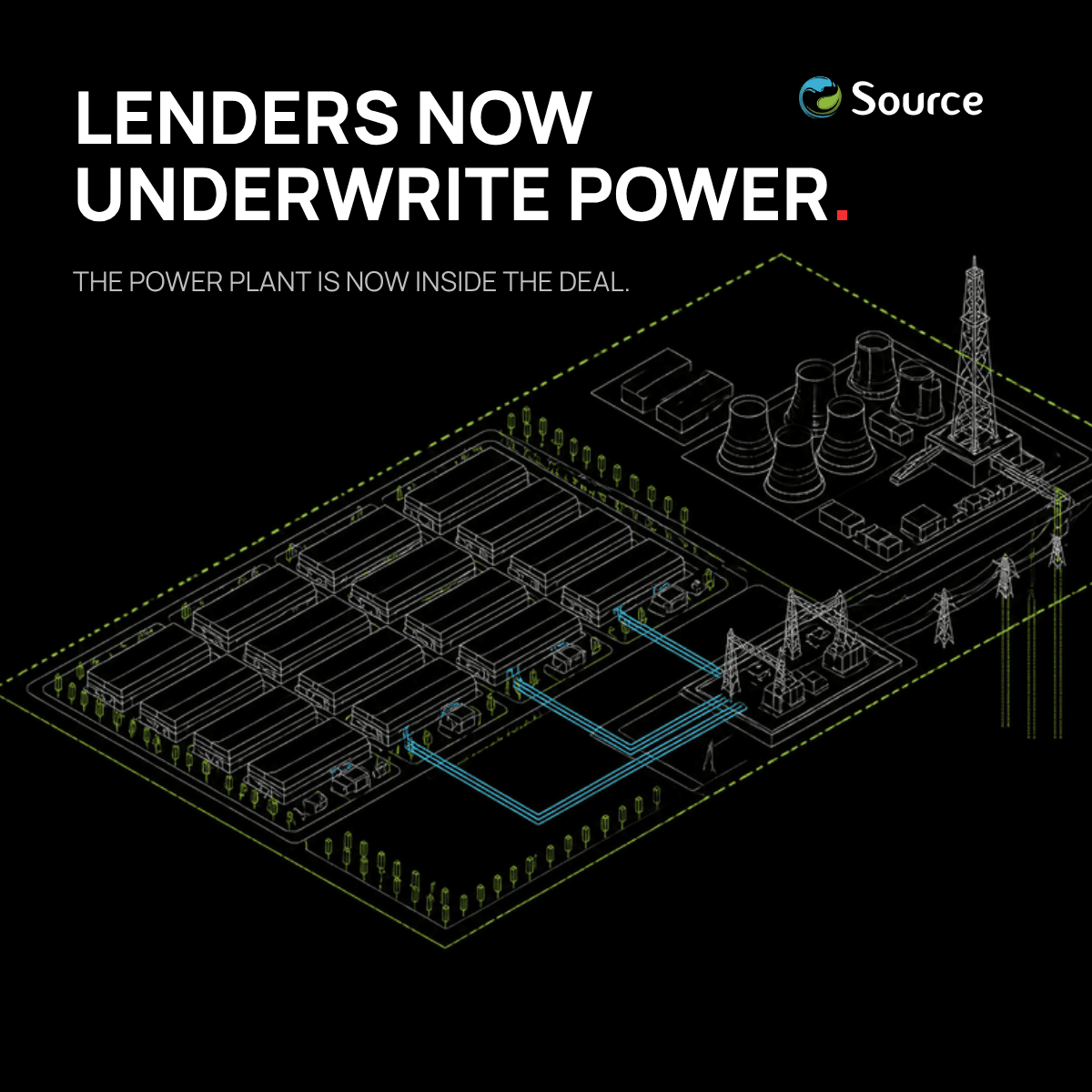
The most important signal for the energy sector sits inside S&P’s construction-risk analysis. Trevor D’Olier-Lees, S&P’s North America infrastructure sector lead, said many 2025 projects left power supply to the tenant, but the agency is now seeing deals where the project company must deliver generation, substations or dedicated grid connections. That brings fuel supply, grid connection and planning risk into the same financing, and some leases carry termination rights if construction runs 180 days late.
For Source Geothermal, this is the point where energy infrastructure becomes a credit question. Lenders underwriting a gigawatt campus now underwrite its power and cooling system. A geothermal resource beneath the site, delivering baseload electricity and stable-temperature cooling without fuel contracts or long transmission builds, removes several of the risks that rating agencies are now pricing.
The capital is available. Projects that can show power certainty will be the ones that keep access to it.
Source: The Tech Capital, Khamila Mulia, “The Quest for Liquidity: How 144A financing is deepening the capital supply for data centre megaprojects,” October 2, 2026.